
100 YEARS SUNSET STRIP HOTELS
100 YEARS SUNSET STRIP HOTELS
100 Years of Sunset Strip Hotels
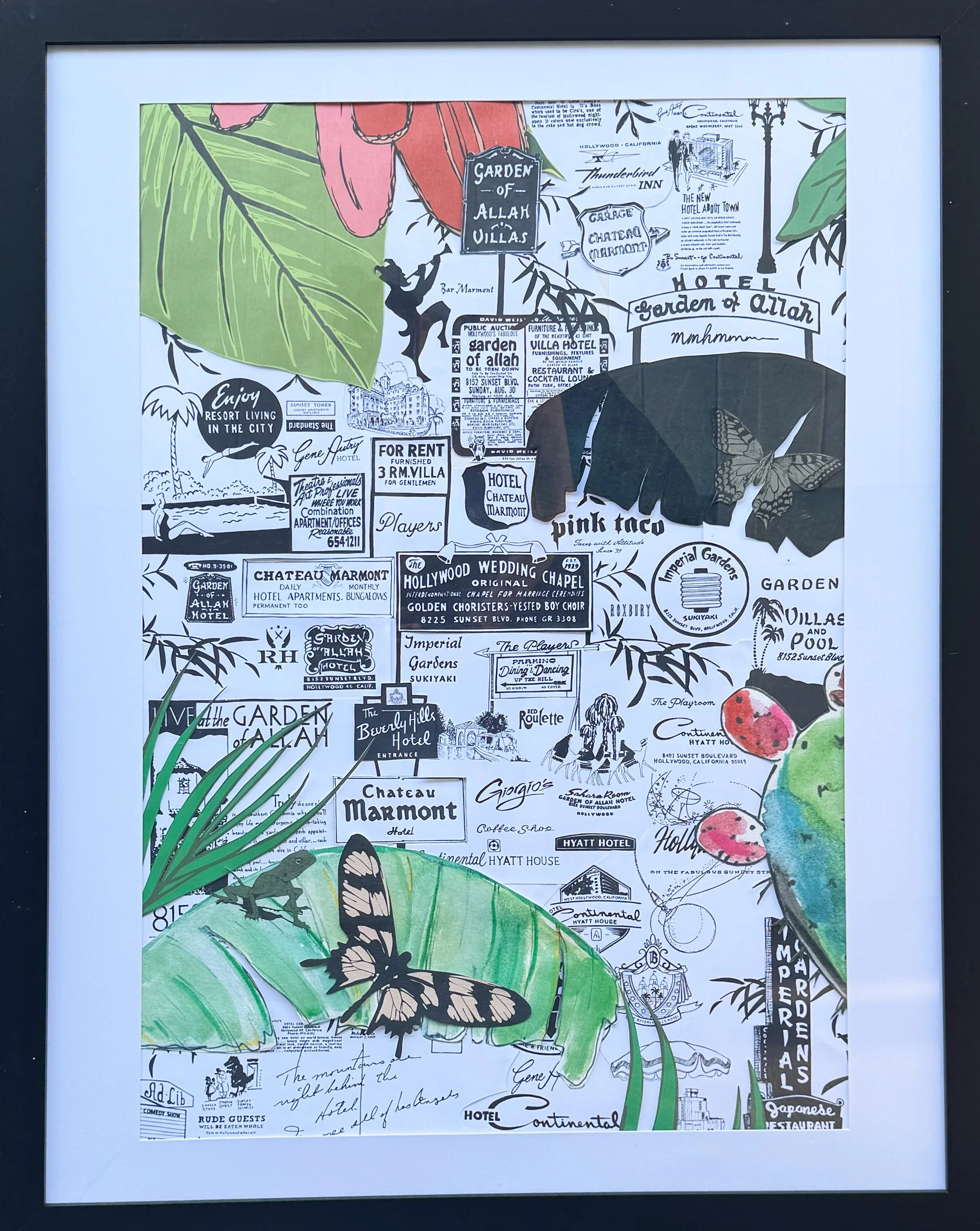
A Visual History of the World-Famous Sunset Strip
From neon dreams to rock ’n’ roll empires, a visual love letter to a century of reinvention, told through the iconic logos that shaped Sunset Boulevard.
The Story Behind the Work
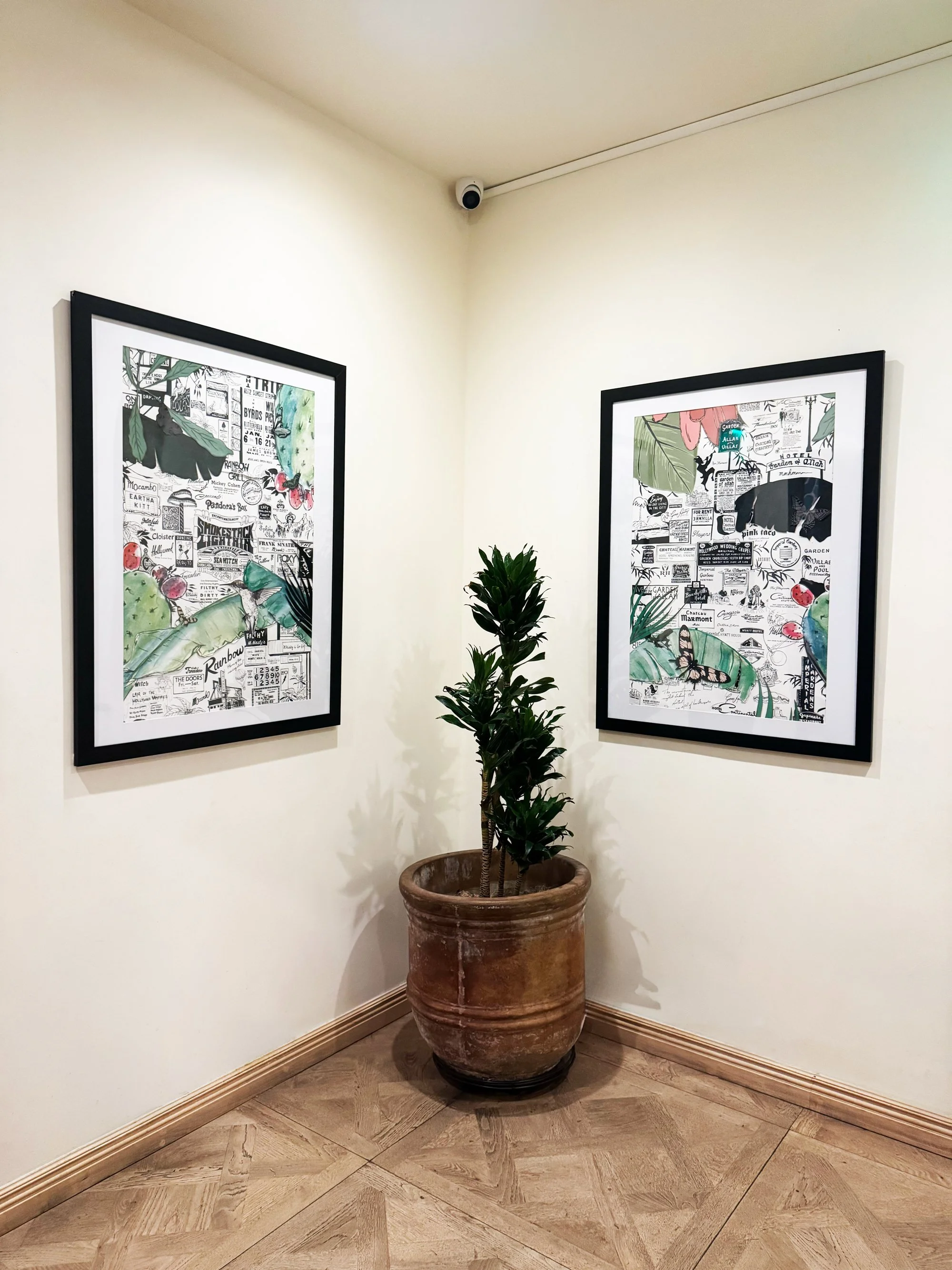
This series celebrates 100 years of the Sunset Strip through two complementary bodies of work: 100 Years of Sunset Strip Hotels and 100 Years of Sunset Strip Clubs. Together, they explore the visual identity, cultural influence and enduring mythology of one of Los Angeles’s most iconic stretches of road.
The inspiration grew from a simple but sobering observation. Our first book, Once Upon a Cocktail – West Hollywood, had been on shelves for just 18 months when we discovered that 23% of the 54 venues it celebrated had already closed. It was a powerful reminder of the fragility of the hospitality industry, and of how quickly the places that shape our collective memories can disappear.
As visual historians, Welcome to the Brightside felt compelled to look further back, tracing a century of change along the 1.7 miles of the Sunset Strip. From legendary hotels that welcomed Hollywood royalty to clubs that launched musical movements and defined generations, these establishments are more than buildings. They are cultural landmarks, each with a story embedded in its name, its identity and its place in the public imagination.
The project brings together 100 years of reinvention through the visual language of venue logos. Each identity represents a moment in time: an era, an ambition, a cultural shift or a dream brought to life by the people who dared to build something extraordinary.
The Material: A Century in Layers
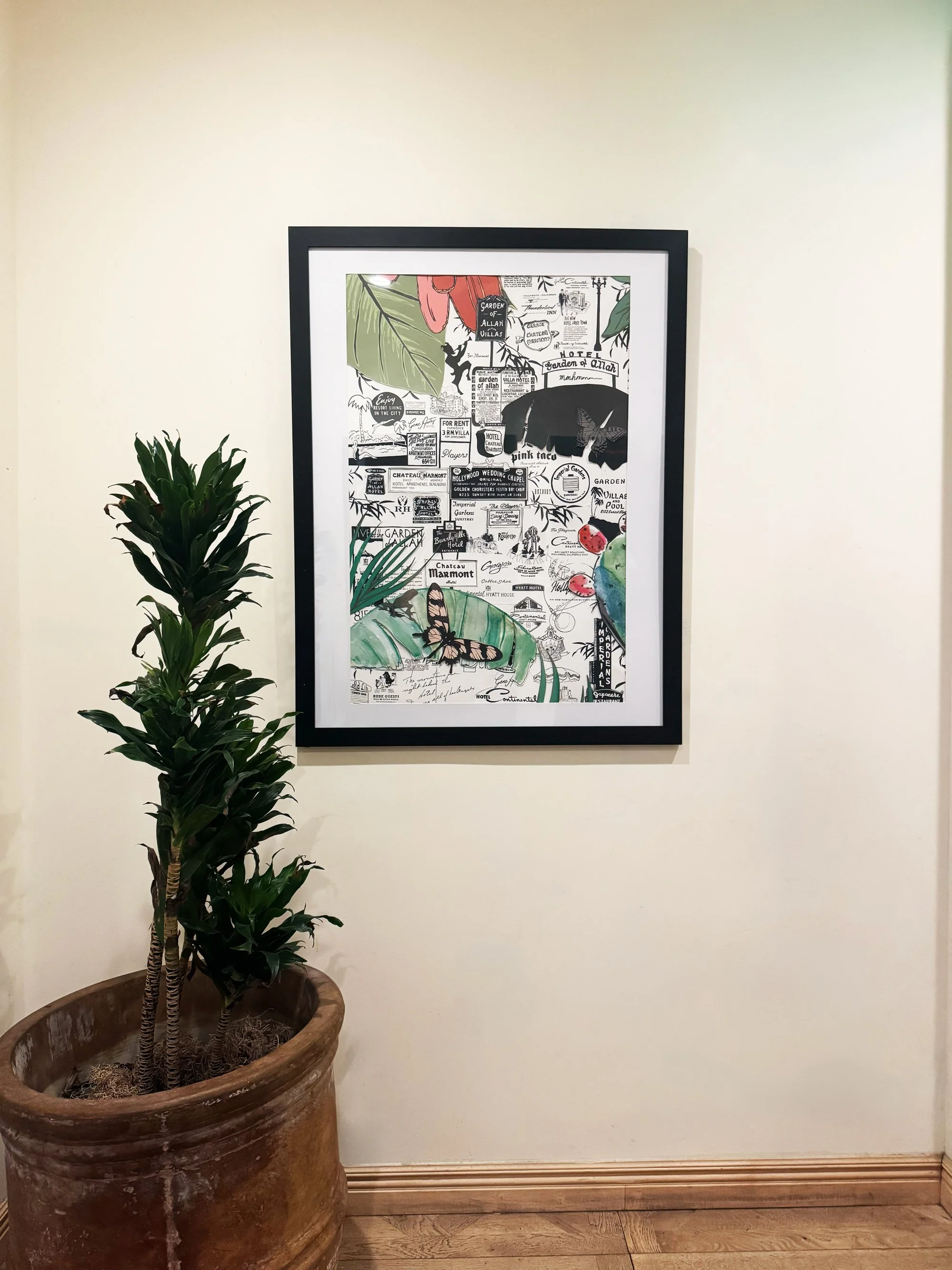
The artwork’s construction reflects the very history it seeks to preserve. Created from layers of collaged paper, each piece echoes the distinctive stripe of Sunset Boulevard itself, transforming the Strip’s visual identity into a physical landscape of accumulated time.
The paper layers are both material and metaphor. Built from reproductions of a century of venue logos, they embody the constant reinvention of the Sunset Strip: businesses opening and closing, identities emerging and fading, and new generations leaving their mark on the foundations of those who came before them.
Like the Strip itself, the works are never defined by a single moment. Their depth comes from accumulation, juxtaposition and change. Familiar identities sit alongside forgotten names, creating a visual record of a place that has continually reinvented itself while retaining its unmistakable character.
The collaged surfaces become a kind of urban archaeology, where graphic design, commercial history and popular culture converge. What might otherwise have been lost to redevelopment or changing tastes is given a new physical presence, preserved through the very act of layering.
Looking Back to Move Forward
Today, as Los Angeles’s hospitality and nightlife industries navigate another period of uncertainty, these works offer a timely perspective. The changing streetscape is not the end of the story. It is another chapter in a century defined by transformation.
The Sunset Strip has always belonged to the dreamers, the risk-takers and the visionaries willing to imagine what comes next. Its history is not simply one of nostalgia, but of resilience: the ability to absorb change, reinvent itself and remain a magnet for creative ambition.
Ultimately, 100 Years of Sunset Strip Hotels and 100 Years of Sunset Strip Clubs are more than archival tributes. They are celebrations of a living cultural landmark, a record of a century of creative reinvention and a statement of faith in the next hundred years.
Because the Sunset Strip has never stood still. It has always been a work in progress.
_
100 Years of Sunset Strip Hotels
Welcome to the Brightside · Working archival index
8152 Sunset Boulevard
Garden of Allah — 1927–1959
Sahara Room — dates unknown
Lytton Savings — 1960; Ed Ruscha, 1966
Great Western Savings — Ed Ruscha, 1973, 1985 and 1995
Washington Mutual — Ed Ruscha, 2007
Chase Bank — dates unknown; demolished 2021
Strip Mall — Ed Ruscha, 1995; demolished 2021
8225 Sunset Boulevard
Chateau Marmont — 1929
Villa for Rent — Ed Ruscha, 1966
Theatre Arts Professional — Ed Ruscha, 1973
8225 Sunset Boulevard — William Morris property
Private Residence — William Morris
Hollywood Wedding Chapel — dates unknown
Players — Preston Sturges; 1940–1953
Playroom, upper floor — 1942
Imperial Gardens — 1953–1989; Ed Ruscha, 1966, 1973 and 1985
The Roxbury — 1980s–1997; Ed Ruscha, 1995
Miyagi’s — 2002–2010; Ed Ruscha, 2007
Pink Taco — 2012–2024
8300 Sunset Boulevard
Private Residence — associated with Wallace and Dorothy Reid; home at 8327 DeLongpre Avenue demolished
Thunderbird Inn — 1962
Hollywood Sunset Hotel — Ed Ruscha, 1966
Ad Lib / Coffee Shop — Ed Ruscha, 1966
Golden Crest View Hotel / Retirement — Ed Ruscha, 1973 and 1985
The Standard — established 1988; Ed Ruscha, 2007
Giorgio’s — dates unknown
Mmhmmmm — dates unknown
The Public - October 2026
8358 West Sunset Boulevard
Sunset Tower Apartment Building — 1932
The Sunset Tower — Ed Ruscha, 1966
State of disrepair — research note
The St. James Club — 1985; Ed Ruscha, 1985
The Argyle — 1992
Sunset Tower Hotel — 2004; Ed Ruscha, 2007
8401 Sunset Boulevard
Gene Autry’s Hotel Continental — 1963–1966
Red Roulette — bar; dates unknown
Café Continental — Ed Ruscha, 1966
Continental Hyatt Hotel — 1966
Formerly Ginsberg’s — Ed Ruscha, 1973
Hyatt on Sunset — Ed Ruscha, 1985
The Silver Screen Restaurant — Ed Ruscha, 1985
Hyatt Hotel — Ed Ruscha, 1995
The Silver Screen Patio — Ed Ruscha, 1995
Andaz West Hollywood, by Hyatt — 1997